
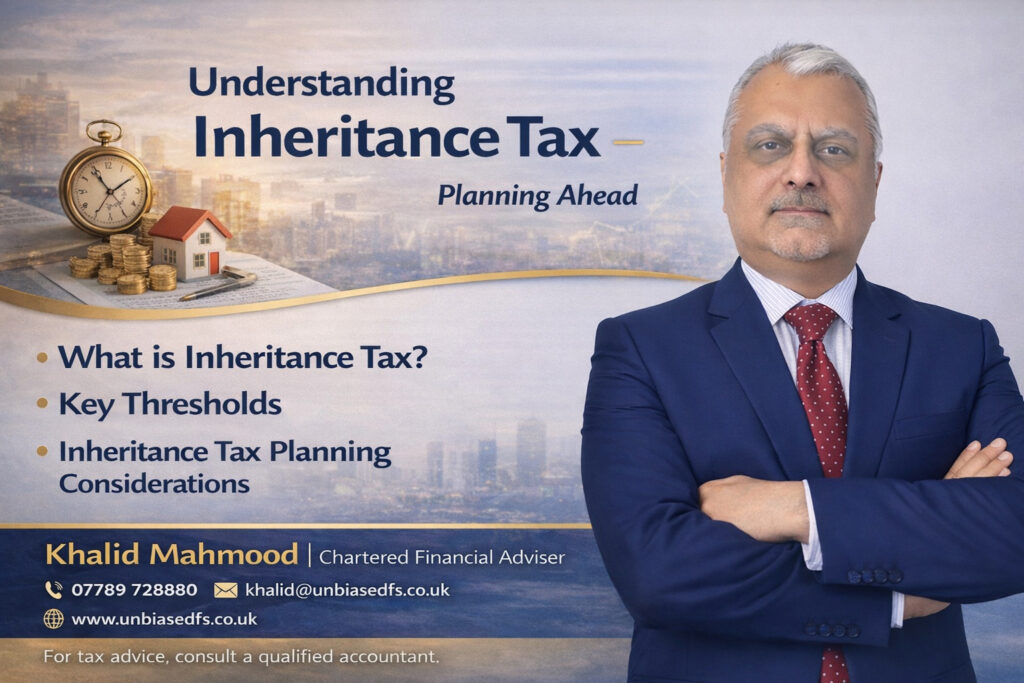
Inheritance Tax (IHT) is one of the most misunderstood areas of financial planning in the UK. Many individuals and families are unaware of how these rules may affect the value of the estate they leave behind and the practical impact this can have on loved ones.
This guide explains what inheritance tax is, how it may affect you, and some of the factors that may be relevant when reviewing your affairs.
What is Inheritance Tax?
Inheritance Tax is a tax that may apply to a person’s estate after they pass away. An estate may include:
- Property and land
- Savings and cash
- Investments
- Personal possessions
Currently, the standard inheritance tax rate in the UK is 40% on the portion of an estate that exceeds the available tax-free thresholds.
Key thresholds to be aware of include:
- £325,000 nil-rate band per individual
- Up to £500,000 where a qualifying residence is passed to direct descendants, subject to the relevant conditions
- Up to £1 million may be available for some married couples or civil partners, depending on individual circumstances and the availability of transferable allowances
While many estates fall below these thresholds, rising property values mean more families may be affected over time.
How Inheritance Tax May Affect You
Without appropriate planning and review, inheritance tax may:
- Reduce the value passed on to loved ones
- Create pressure to sell property or assets to meet liabilities
- Add further stress for families during an already difficult time
Reviewing your affairs early may help identify areas that require attention.
What You Need to Know
Inheritance tax is not simply about what happens after death — it is also influenced by decisions made during your lifetime.
Some important factors include:
The 7-Year Rule
Certain gifts made during your lifetime may fall outside your estate if you survive for seven years after making them, subject to the relevant rules.
Spouse and Civil Partner Exemption
Transfers between spouses or civil partners are generally exempt from inheritance tax.
Property Allowances
Additional allowances may apply when passing a qualifying home to children or grandchildren, subject to the relevant conditions.
Changing Regulations
Inheritance tax rules continue to evolve. For example, from 6 April 2027, most unused pension funds and death benefits are expected to fall within the scope of IHT, subject to legislation and implementation.
This is one reason why regular review can be valuable.
Common Misconceptions
Some common misconceptions include:
- “Inheritance tax only affects the wealthy”
- “Giving everything away avoids tax”
- “My family will deal with it later”
In practice, poor or delayed planning can create unexpected tax issues, even for estates that may not initially appear substantial.
Understanding the rules clearly can help individuals and families make more informed decisions.
Inheritance Tax Planning Considerations
There may be legitimate planning options available to help review inheritance tax exposure, depending on your personal, legal, tax and financial circumstances.
These may include:
Personal Allowance Review
Reviewing the use of available tax-free thresholds and transferable allowances.
Lifetime Gifting
Considering whether gifting may be appropriate as part of a wider estate planning discussion.
Trust Planning
Where appropriate, trusts may form part of wider estate planning, depending on the objectives, family circumstances and legal advice.
Estate Review
Reviewing assets, ownership and the structure of the estate to identify areas that may require further consideration.
Protection Solutions
In some cases, life insurance written in trust may be considered as a way of helping meet a potential inheritance tax liability.
Business and Asset Relief
If you own a business or qualifying assets, reliefs may be available, subject to detailed eligibility, legal interpretation and current legislation.
Is It Possible to Reduce Inheritance Tax?
In some circumstances, inheritance tax exposure may be reduced through early planning and careful structuring. However, the suitability and effectiveness of any approach will depend on your personal, legal, tax and financial circumstances.
This usually requires:
- Early consideration
- A clear understanding of the estate
- Appropriate professional input where needed
Why Review Matters
Inheritance tax planning can be complex, and mistakes or assumptions can be costly.
A proper review can help:
- Clarify your position
- Identify potential issues
- Highlight areas where regulated financial advice, legal advice or tax advice may be required
Final Thought
Inheritance tax is not only about tax — it is also about preserving wealth, reducing uncertainty, and helping families prepare more effectively for the future.
Early planning and regular review can make a meaningful difference.
About This Article & Contact Information
For professional financial advice in relation to inheritance tax planning, please contact:
Mr Khalid Mahmood
Chartered Financial Adviser
 07789 728880
 khalid@unbiasedfs.co.uk
 www.unbiasedfs.co.uk
Unbiased Independent Financial Advisers Ltd
Level 1, Devonshire House
1 Mayfair Place
Mayfair, London
W1J 8AJ
Important Notice
This article is for general information only and does not constitute personal financial, tax or legal advice. Estate and inheritance planning is not regulated by the Financial Conduct Authority. The value of investments and the income they produce can fall as well as rise. You may get back less than you invested. The benefits to the treatment of tax will depend on your individual circumstances and may be subject to change in future. Estate planning may require input from a solicitor and/or tax adviser.